
Arthrose Active: giving movement its rightful place against knee osteoarthritis

In Belgium, osteoarthritis affects nearly two million people, sometimes as early as their thirties, and women more than men. With Arthrose Active, we’re launching an educational platform to help people better understand the condition and give movement its rightful place, to support patients and healthcare professionals.
Often thought of as a condition reserved for older people, and reduced to simple wear and tear, osteoarthritis is in fact a chronic disease that can turn everyday actions, such as walking or climbing stairs, into repeated ordeals. And it affects younger adults too. Arthrose Active grew out of this observation: a Belgian educational platform available in French and Dutch, designed for those who want to maintain or regain movement.
Osteoarthritis is not just a matter of age
Figures from Sciensano1 show reported cases across all age groups, well before 65. Worldwide, around 27% of people living with osteoarthritis are 55 or younger, and more than half of new cases occur before that age2. The knee is one of the most common sites, and the most disabling. Elite athletes3, people who are overweight4 or in physically demanding jobs5 are particularly exposed. Women are also more affected: 22% of the Belgian population, compared with 15% of men1.
Movement, at the core of care
Before resorting to surgery, there is an often-underestimated therapeutic lever: movement. When adapted, it is an integral part of the underlying management of osteoarthritis, helping to reduce pain and improve mobility.
 Prof. Jean-François Kaux, Head of Physical Medicine and Sports Traumatology, CHU de Liège
International guidelines point in the same direction6: when properly conducted, adapted movement helps reduce pain and maintain mobility.
A platform for every profile

There isn’t one osteoarthritis. Behind the same word lie very different faces and life stories. A short test guides each visitor towards one of five journeys, designed for distinct life situations, with concrete guidance, patient testimonials and the support of a scientific committee:
- Prof. Jean-François Kaux, physical medicine and sports traumatology
- Prof. Jacques Bentin, rheumatologist
- Prof. Camille Choufani, orthopaedic surgeon
- Prof. Krik Heusdens, orthopaedic surgeon
- Dr Philippe Van Overschelde, orthopaedic surgeon

The platform is also supported by the Fondation Arthrose and ReumaNet.
In patients with osteoarthritis, the fear of moving worsens the disease and sometimes their isolation. One of the major challenges is to help them move away from a fatalistic outlook: they need encouragement and guidance to regain movement, provided it is adapted, gradual and realistic. Arthrose Active rightly reminds us that the patient must remain the main actor in their own care.
Prof. Yves Henrotin, President of the Fondation Arthrose
For people with osteoarthritis, the fear of moving often makes the symptoms worse — and can sometimes deepen their sense of isolation. One of the biggest challenges is helping them let go of a fatalistic mindset: they need encouragement and support to start moving again. Movement is an integral part of treatment, as long as it’s adapted, gradual and realistic. The Artrose Actief initiative rightly insists that the patient must stay at the heart of their own treatment and care.
Jeannine Engelen, board member of ReumaNet
Refractory osteoarthritis and Belgian research
Some people keep suffering despite well-conducted care: adapted exercise, weight management where needed, and symptomatic treatments. Refractory osteoarthritis is the term used when symptoms persist for at least six months despite an adapted approach7. In these situations, the goal stays the same: reducing pain to remain active.
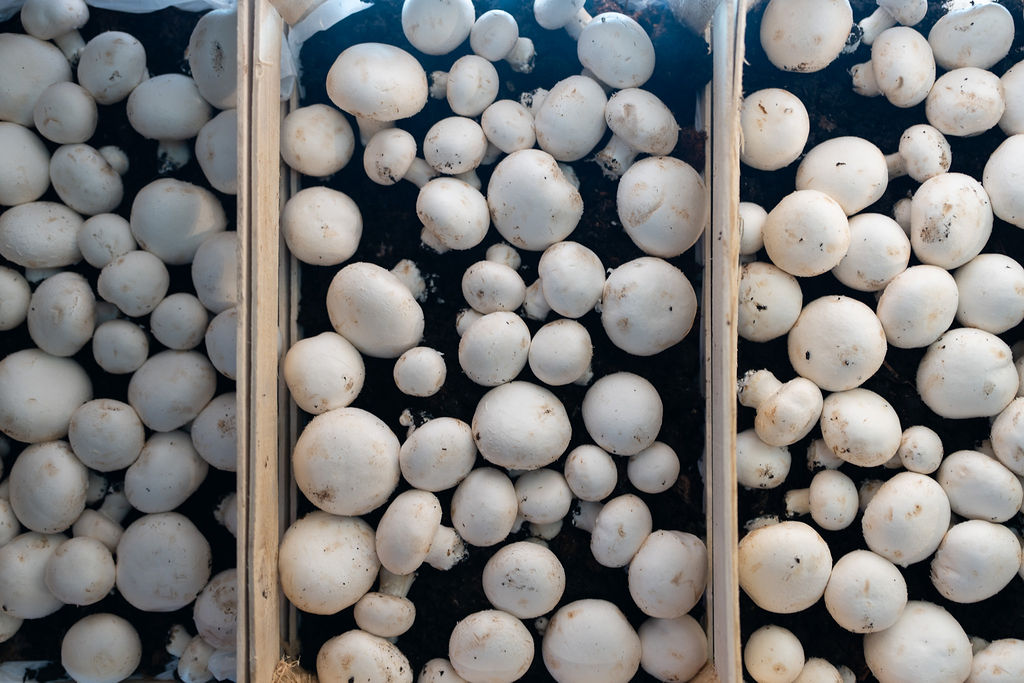
This is where a Belgian research track comes in. CM-chitosan, an extract of the common mushroom, was developed after fifteen years of research in Liège laboratories. Delivered by injection into the joint, it helps improve lubrication and reduce oxidative stress8. Oxidative stress means that too many harmful substances (free radicals) are created in the body that can damage cells. This can contribute to damage to the cartilage and other tissues in the joint.
A twelve-month clinical study in patients with refractory knee osteoarthritis (PIONEER, 2025)9 reports an improvement in symptoms sustained at one year, including in more complex profiles, with the aim of easing the return to adapted activity and, where possible, postponing premature surgery. This approach is discussed case by case with the specialist. Innovation in osteoarthritis is not only about treatments, but also about the way patients are supported over time. With Arthrose Active, we want to offer an approach that is more accessible, more proactive and centred on mobility.
Houtaï Choumane, CEO of KiOmed Pharma

Arthrose Active content is informational and does not replace medical advice. Any care decision should be discussed with a healthcare professional.
About KiOmed Pharma
KiOmed Pharma is a Belgian biotechnology company specialising in the development and commercialisation of innovatif solutions for degenerative conditions such as osteoarthritis, skin ageing and ophthalmology. The aim is to improve the quality of life of patients facing these health issues. Spon out of KitoZyme, KiOmed Pharma has built strong expertise in the chemistry of natural chitosan. At the heart of this innovation is carboxymethyl-chitosan, the molecule behind its patented KiOmedine® technology.
Sources
- Sciensano. Non-Communicable Diseases : Musculoskeletal disorders, Health Status Report, 15 Dec. 2022, Brussels. https://www.healthybelgium.be/en/ (consulted on 25/02/2026).
- World Health Organisation. Osteoarthritis, fact sheet. who.int (consulted on 25/02/2026).
- Migliorini F. et al. The Influence of Athletes’ Age in the Onset of Osteoarthritis: A Systematic Review. Sports Med Arthrosc Rev. 2022;30(2):97-101.
- GBD 2021 Osteoarthritis Collaborators. Global, regional, and national burden of osteoarthritis, 1990–2020 and projections to 2050. Lancet Rheumatol. 2023;5:e508–22.
- Wang X. et al. Occupational Risk in Knee Osteoarthritis: A Systematic Review and Meta-Analysis. Arthritis Care Res. 2020;72(9):1213-1223.
- McAlindon T. et al. OARSI guidelines for the non-surgical management of knee osteoarthritis. Osteoarthritis Cartilage. 2014;22:363-388.
- Migliore A. et al. Towards a consensus definition of “refractory osteoarthritis”. Ther Adv Musculoskelet Dis. 2026 (in press).
- Vandeweerd J-M. et al. Non-clinical assessment of lubrication and free radical scavenging of an innovative non-animal carboxymethyl chitosan biomaterial for viscosupplementation. PLoS ONE. 2021;16(10):e0256770.
- Van Overschelde P. et al. Twelve-month efficacy of carboxymethyl-chitosan in refractory knee osteoarthritis: A randomized controlled trial (PIONEER). Osteoarthr Cartil Open. 2025;7(2):100605.
